
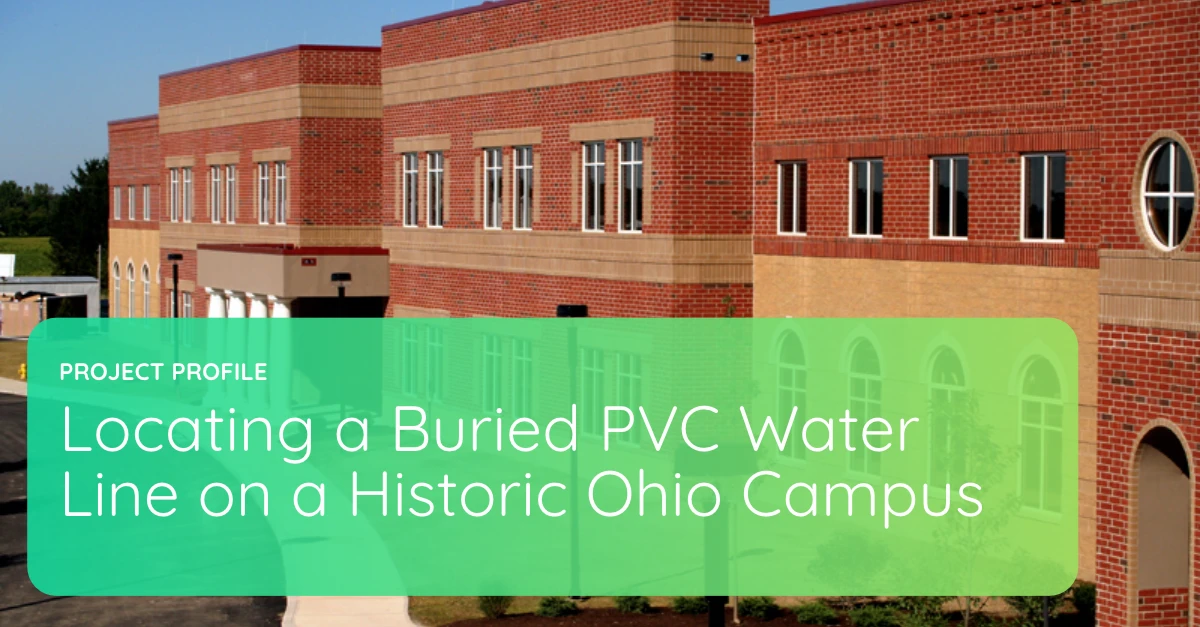
Antioch’s roots in Yellow Springs, Ohio, stretch back to 1852. The institution’s original buildings were constructed more than 170 years ago, and the property has been built, expanded, repaired and reworked by generations of owners and contractors.
The 4-inch PVC water line involved in this locate was obviously not part of the original campus construction. But the history matters. On a property this old, underground utilities rarely follow one clean, modern plan. New lines get added, old lines get repaired and buildings change use. What is in the ground does not always match what is on the map.
That was the situation facing a contractor trying to find a buried water line and valve manifold at Antioch University.
The available records did not provide enough information to confidently mark the line. The target was approximately five feet deep in dense clay, the valve sleeves were PVC and the plastic lids had been covered by roughly one foot of soil.
No tracer wire. No exposed valve box. No reliable metallic target.
There were also gas lines and three-phase electrical conduits in the area, so guessing at the alignment was not an option.
Why the Usual Locating Tools Were Limited
A standard electromagnetic (EM) locator needs something conductive to carry a signal. That can be a metallic pipe, tracer wire or another conductive component running with the utility.
In this case, the water line was PVC and there was no tracer wire. The valve sleeves and buried lids were also plastic, so there was nothing useful for a ferrous locator or metal detector to pick up.
Ground-penetrating radar was another possibility, but the combination of dense clay, approximately five feet of depth and multiple utilities in the work area made it a difficult application. GPR can be a valuable tool, but experienced operators know that soil conditions can decide whether it gives you a clear target or a screen full of questionable responses.
Vacuum excavation would eventually expose the line, but the contractor would still need to know where to start digging.
Connecting 480 Feet Away
An accessible valve was available approximately 480 feet from the suspected location of the buried manifold.
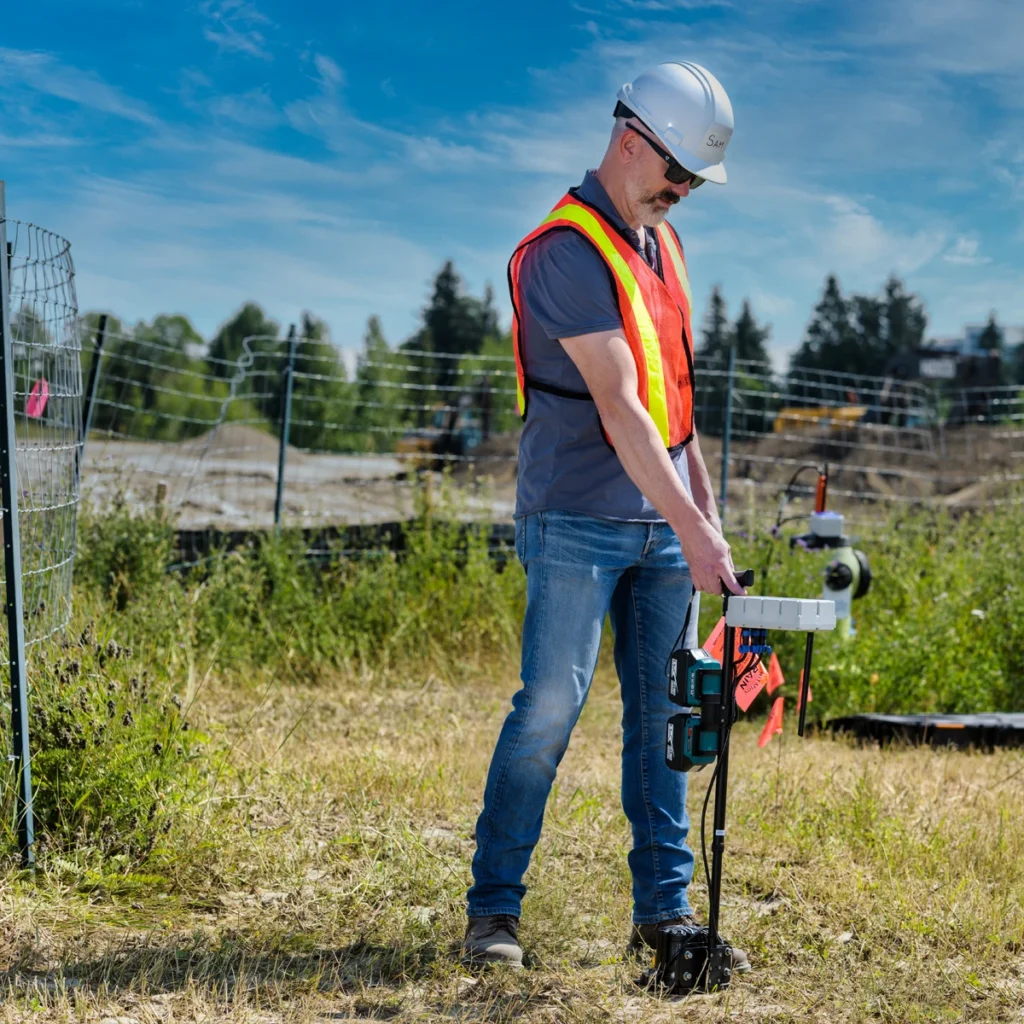
The SonicFinder 1000 was connected at that valve, establishing an acoustic contact point with the water system. Brad Horton of Solinas Technologies then worked across the site with the handheld unit, following the response from the buried 4-inch PVC line.
The signal carried all the way from the connection point to the target area, allowing Brad to trace the line and identify the buried tee and valve manifold.
For a locator coming from an electromagnetic background, acoustic locating requires a change in thinking.
With EM equipment, increasing the frequency can sometimes help get a signal onto a difficult conductor, although it can also increase bleed and coupling onto nearby utilities. The SonicFinder 1000 does not need electrical continuity. It uses a targeted acoustic response to identify the buried pipe.
That difference is especially useful when the pipe is plastic and there is no usable tracer wire.
Located in About 30 Minutes
The complete locate took approximately half an hour, including some time for the usual jobsite jokes and stories.
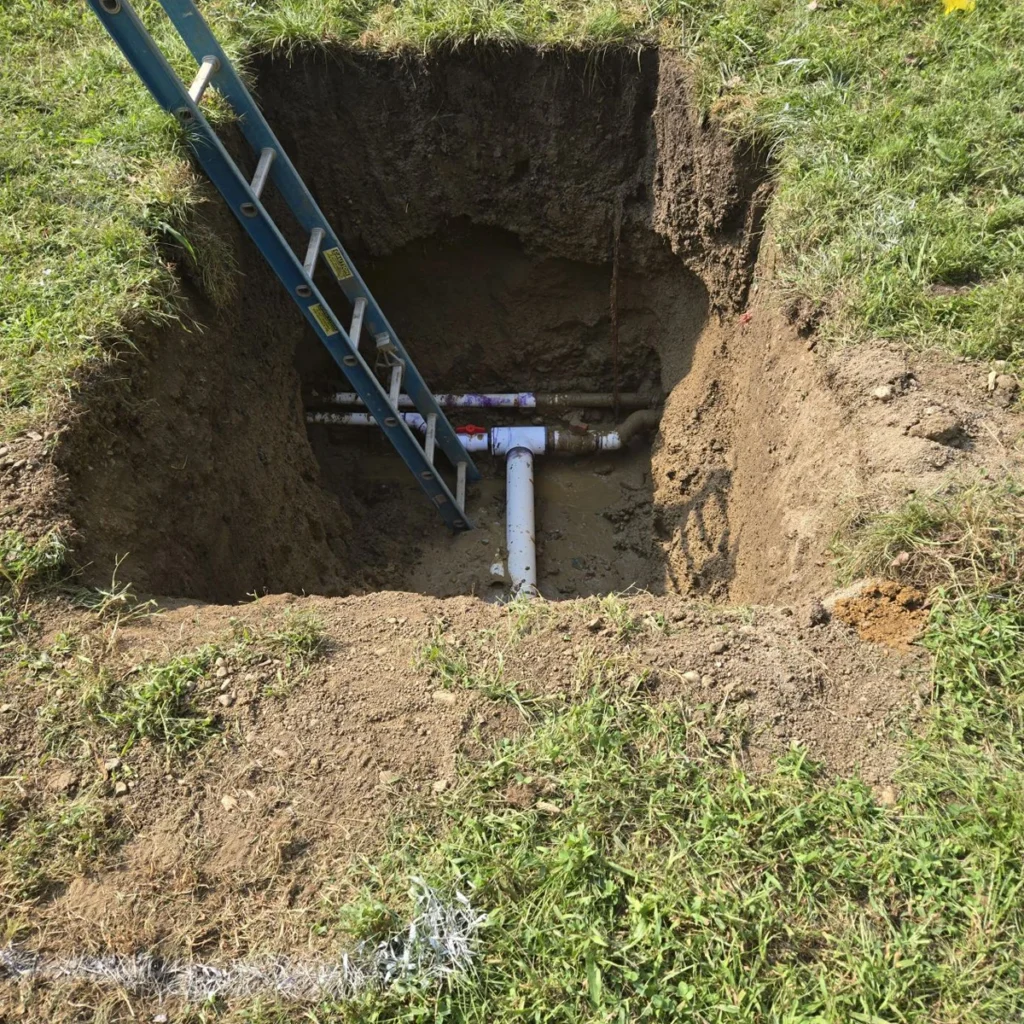
Excavation then exposed the 4-inch PVC line, tee and valve manifold at the identified location. The photo from the excavation shows the buried assembly at the bottom of the cut.
By finding the target before excavation, the contractor reduced the amount of exploratory work required to uncover it. Vacuum trucks in the area typically cost approximately $3,000 to $3,500 per day.
That does not mean this locate eliminated an entire day of vacuum-truck work or produced a $3,500 saving by itself. Other work still had to be completed at the site. It did mean the contractor could spend less time searching and begin work with a much better idea of where the water line and manifold were located.
For a crew in the field, that is the useful result. Find the correct line, narrow the excavation area and avoid digging unnecessary holes.
What Made This Locate Difficult
This was not a controlled demonstration over a clean test loop. It was a working site with the conditions locators regularly deal with:
- Incomplete utility records
- A non-metallic water line
- No tracer wire
- Plastic valve sleeves and lids
- About five feet of cover
- Dense clay soil
- Gas and electrical utilities in the same area
- A usable connection point located 480 feet away
No single locating method works perfectly in every soil, at every depth or on every pipe material. Records, EM locating, GPR, acoustic locating and physical verification all have a place in the locator’s toolbox.
The important part is knowing what each method needs in order to work.
An EM locator needs a conductive path. GPR needs suitable ground conditions and enough contrast to produce an interpretable response. Vacuum excavation provides physical confirmation, but only where the crew excavates.
Acoustic locating provides another option when the pipe itself cannot carry an electromagnetic signal.
Another Option When Tracer Wire Is Missing
A missing tracer wire does not make a PVC water line impossible to locate. It means the crew needs another way to follow the pipe.
At Antioch, the SonicFinder 1000 carried a usable response from a valve 480 feet away, through a 4-inch PVC water line and into a congested target area. Approximately 30 minutes after starting the locate, the buried tee and valve manifold had been identified for excavation.
For utilities and contractors dealing with plastic pipe, buried access points and questionable records, that is the kind of field result that matters.
Learn more about locating water mains without tracer wire or see how the SonicFinder 1000 helps locate PVC and other non-metallic buried pipe.